Introduction
The construction equipment industry has evolved rapidly over the last few decades. Modern infrastructure projects demand machinery that is efficient, durable, and capable of handling complex tasks. Among the names that have attracted attention in recent years is Teckaya Construction Equipment. Many people searching for information about the company often ask, “How was Teckaya Construction Equipment founded? Understanding the origins of a company provides valuable insight into its values, mission, and long-term goals. Every successful equipment manufacturer begins with a vision, and Teckaya is no exception. From identifying industry challenges to developing practical machinery solutions, the company has worked to establish its presence in a competitive market.
This article explores the history, development, business philosophy, products, and future direction of Teckaya. If you have ever wondered how was Teckaya Construction Equipment founded, this guide provides a detailed overview of the company’s journey.
Company Overview
Teckaya Construction Equipment is associated with the manufacturing and supply of construction machinery designed to support infrastructure, commercial, and industrial projects. The company focuses on providing equipment that enhances productivity while maintaining operational reliability. Construction companies depend on machinery that performs consistently in demanding environments. Teckaya’s business model emphasizes innovation, quality control, and customer support to meet those requirements.
Key Areas of Focus
- Construction machinery
- Equipment innovation
- Operational efficiency
- Equipment reliability
- Customer-focused solutions
- Long-term industry growth
How Was Teckaya Construction Equipment Founded?
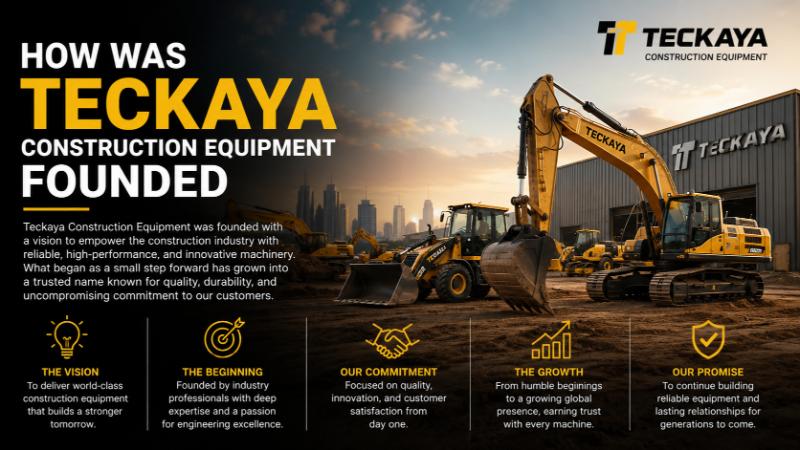
To answer the question how was Teckaya Construction Equipment founded, it is important to understand the market conditions that inspired its creation.
The founders recognized a growing demand for construction machinery that could balance affordability, durability, and performance. Many contractors struggled with equipment that either exceeded their budgets or failed to provide long-term reliability. Seeing this gap in the market, the founders envisioned a company dedicated to producing practical solutions for construction professionals. Their objective was not merely to sell machinery but to help contractors complete projects more efficiently.
The company’s early efforts focused on understanding customer needs, studying equipment limitations, and developing machinery capable of delivering dependable performance across a variety of job sites. Through strategic planning and investment in engineering capabilities, Teckaya began building a foundation that would support future expansion.
The Vision Behind the Company
Every successful organization starts with a vision. Teckaya’s founders aimed to create a company that would prioritize both innovation and customer satisfaction.
Their goals included:
Improving Construction Efficiency
Construction delays often result from equipment failures or insufficient machinery performance. Teckaya sought to minimize these challenges by developing reliable equipment solutions.
Supporting Infrastructure Development
Growing cities require roads, bridges, buildings, and utilities. The company aimed to contribute to these projects through dependable machinery.
Building Long-Term Partnerships
Instead of focusing solely on sales, the company worked toward creating lasting relationships with contractors and project managers.
Early Challenges and Development
Like many companies entering a competitive industry, Teckaya faced several obstacles during its initial years.
Market Competition
The construction equipment sector already contained established manufacturers with strong reputations. Entering such a market required strategic differentiation.
Product Development Costs
Designing and manufacturing construction machinery involves significant investments in research, testing, and production facilities.
Building Customer Trust
New companies must demonstrate reliability before customers are willing to make major equipment purchases.
Despite these challenges, Teckaya continued investing in quality improvement and customer service, helping establish credibility within the industry.
Growth Strategy
After its foundation, the company focused on sustainable growth rather than rapid expansion.
Product Diversification
The company gradually expanded its equipment offerings to address different construction requirements.
Market Expansion
By entering new regions and forming partnerships with distributors, Teckaya increased its market reach.
Customer Support
Strong after-sales service contributed significantly to customer retention and brand loyalty.
Information Table: Key Stages of Development
| Stage | Description | Impact |
|---|---|---|
| Foundation | Company established to address industry needs | Created business direction |
| Research Phase | Market analysis and product planning | Improved product relevance |
| Manufacturing Setup | Development of production capabilities | Enabled equipment production |
| Product Launch | Introduction of initial machinery | Entered competitive market |
| Expansion | Growth into additional regions | Increased customer base |
| Innovation | Continued product improvement | Enhanced competitiveness |
Product Categories Commonly Associated with Construction Equipment Manufacturers
Although equipment portfolios evolve over time, construction equipment companies often focus on several major categories.
Excavation Equipment
They support digging, trenching, and material handling operations.
Earthmoving Machinery
Earthmoving equipment assists with site preparation, grading, and land development.
Material Handling Equipment
Construction projects require machinery capable of moving heavy materials efficiently.
Road Construction Machinery
Road development relies on specialized equipment designed for paving and surface preparation.
Compact Equipment
Compact machinery provides flexibility in urban and space-constrained environments.
Why Equipment Reliability Matters
One reason contractors carefully evaluate equipment providers is the direct relationship between machinery performance and project success.
Reliable equipment helps:
- Reduce downtime
- Improve productivity
- Lower maintenance costs
- Increase worker safety
- Meet project deadlines
- Improve profitability
Companies that prioritize these outcomes often gain stronger positions within the marketplace.
The Role of Innovation
Innovation remains a critical factor in modern construction equipment manufacturing.
Technological advancements have transformed the industry in several ways.
Improved Fuel Efficiency
Modern equipment is designed to maximize output while reducing fuel consumption.
Smart Monitoring Technology
Digital monitoring systems allow operators to track machine performance and maintenance needs.
Environmental Improvements
Manufacturers increasingly focus on reducing emissions and environmental impact.
These innovations contribute to better project outcomes and improved equipment value.
Competitive Advantages
Companies that succeed in the construction equipment industry often share several characteristics.
Quality Manufacturing
Consistent quality builds customer confidence.
Strong Engineering Teams
Skilled engineers drive product development and innovation.
Customer Service
Responsive support strengthens long-term business relationships.
Industry Knowledge
Understanding contractor challenges helps manufacturers create practical solutions.
Continuous Improvement
Ongoing development ensures products remain competitive.
Pros and Cons
Pros
- Focus on construction industry needs
- Emphasis on equipment reliability
- Potential for long-term customer support
- Commitment to innovation
- Supports infrastructure development
Cons
- Competition from established global brands
- Significant manufacturing investment requirements
- Economic downturns can affect equipment demand
- Rapid technological changes require continuous adaptation
Industry Impact
Construction equipment manufacturers contribute significantly to economic development.
Their machinery supports projects such as:
- Highways
- Commercial buildings
- Residential developments
- Airports
- Industrial facilities
- Public infrastructure
Without modern equipment, many large-scale projects would require substantially more time and labor.
The emergence of companies like Teckaya reflects the industry’s ongoing need for innovation and specialized solutions.
Future Outlook
The future of construction equipment manufacturing appears promising due to increasing infrastructure investments worldwide.
Several trends are expected to influence growth:
Automation
Automated machinery may improve productivity and reduce operating costs.
Sustainability
Environmental considerations continue shaping equipment design.
Digital Integration
Connected equipment allows better performance monitoring and predictive maintenance.
Global Infrastructure Growth
Expanding urban populations create demand for new construction projects.
Organizations that adapt successfully to these trends are likely to strengthen their market positions.
Why People Search for Company Histories
Many customers, investors, and industry professionals seek information about company origins before making decisions.
Learning how was Teckaya Construction Equipment founded helps readers understand:
- The company’s mission
- Leadership vision
- Market objectives
- Growth strategy
- Commitment to innovation
A company’s foundation story often reveals the principles that continue guiding its operations today.
Conclusion
The question “How was Teckaya Construction Equipment founded reflects growing interest in understanding the company’s background and business philosophy. The company emerged from the recognition that construction professionals needed dependable, efficient, and cost-effective machinery solutions. By focusing on innovation, reliability, and customer support, Teckaya established a foundation aimed at long-term growth within the construction equipment sector. While competition remains intense, companies that prioritize quality and continuous improvement often create lasting value for their customers.
As infrastructure development continues around the world, construction equipment manufacturers will remain essential contributors to economic growth. Teckaya’s journey illustrates how a clear vision and commitment to solving industry challenges can help shape a company’s success.